
LEADERSHIP
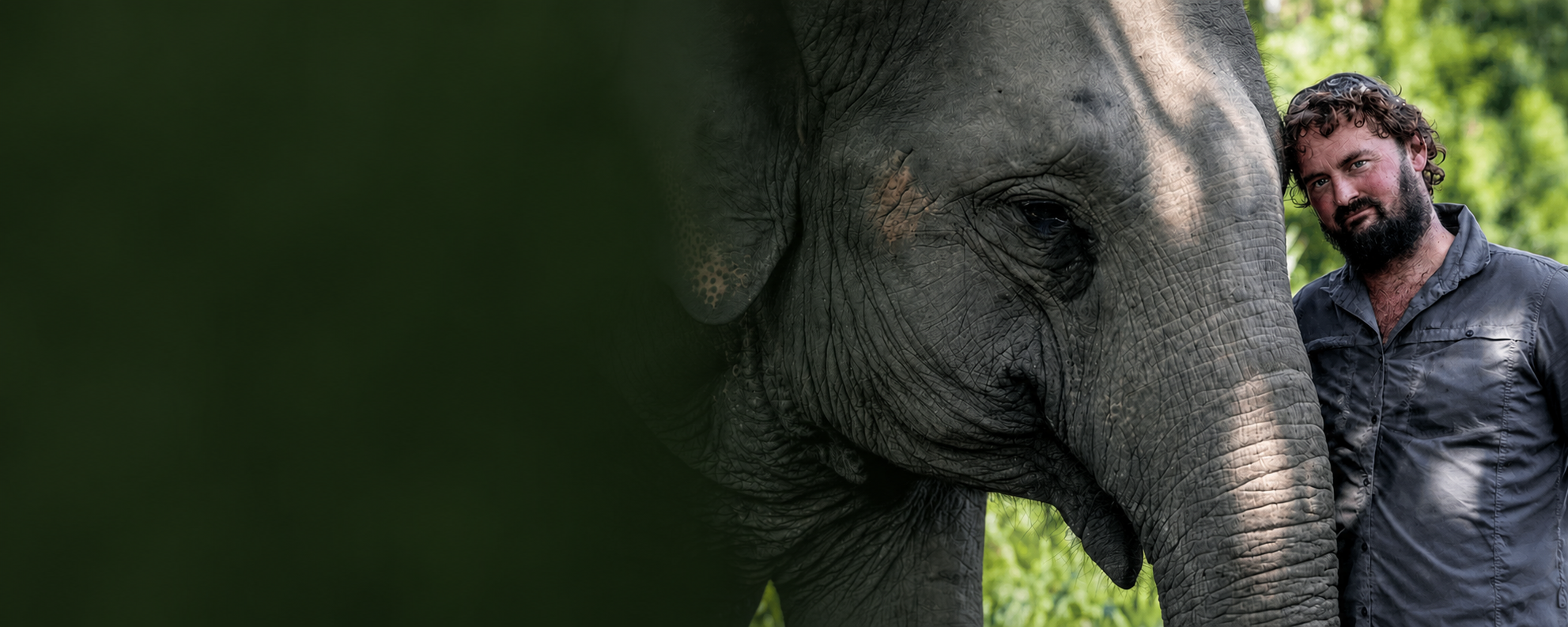
Dr. Paul O'Donoghue
Founder & Chief Scientific Lead
Dr. Paul O'Donoghue is an international conservation scientist with more than four decades of experience advancing biodiversity conservation, endangered species recovery, ecosystem restoration, and environmental stewardship. His work has supported governments, scientific institutions, and conservation organizations in developing practical, science-led solutions to some of the world's most pressing biodiversity challenges.
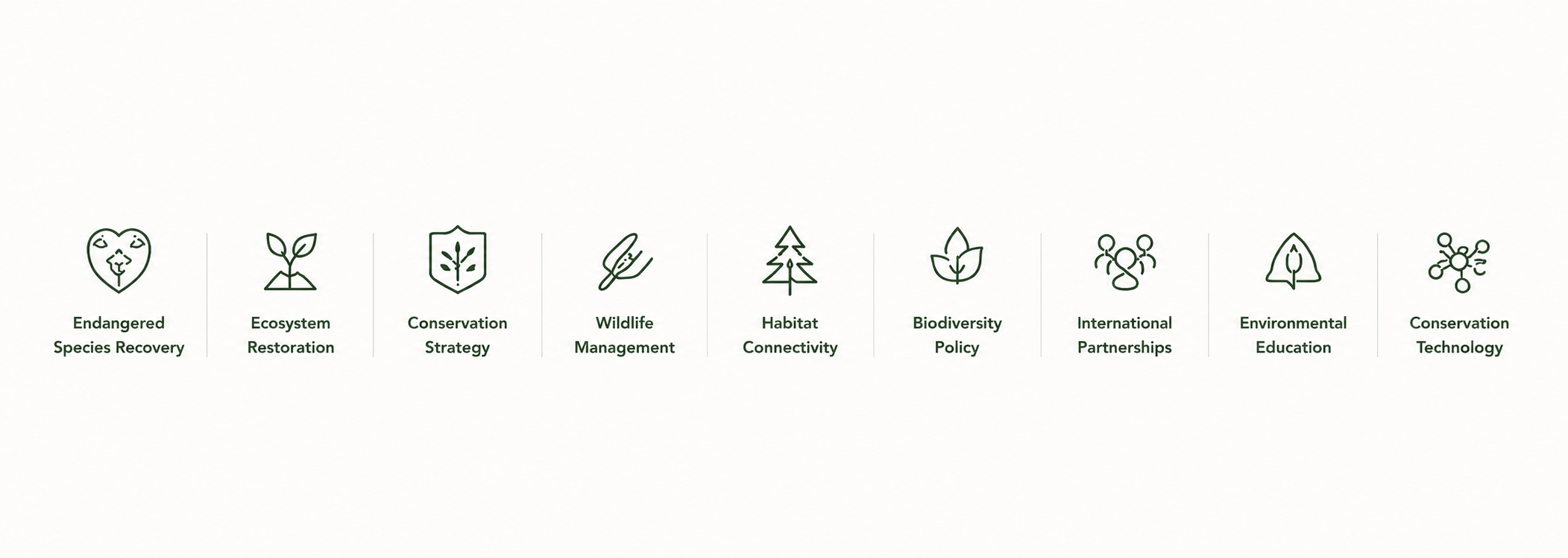
AREAS OF EXPERTISE
CAREER OVERVIEW
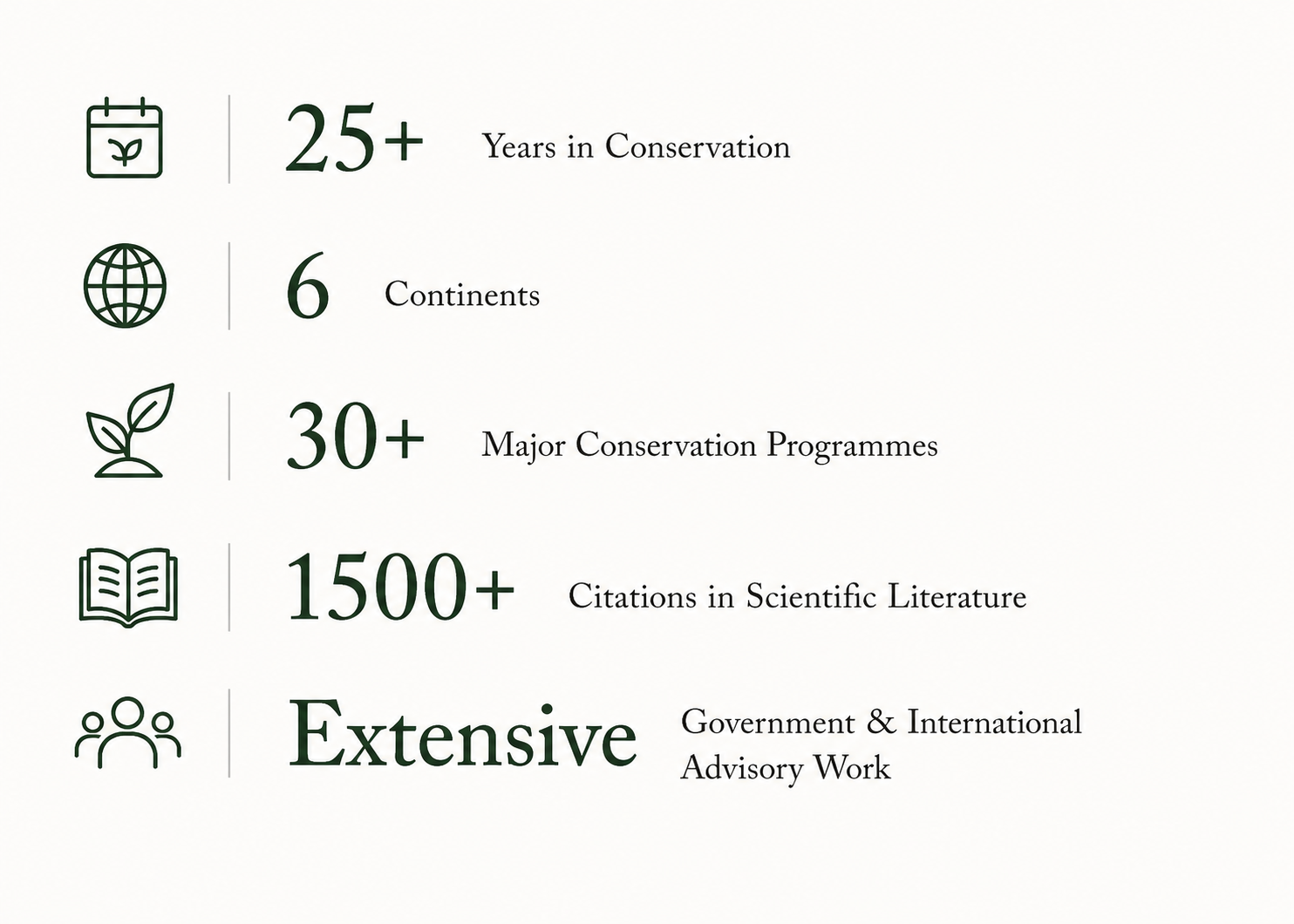
For more than 25 years, Dr. Paul O'Donoghue has worked at the intersection of science, conservation, and environmental policy. Throughout his career, he has led and advised conservation initiatives focused on protecting endangered species, restoring ecosystems, strengthening habitat connectivity, and supporting long-term biodiversity management.
His work has brought together governments, scientific institutions, conservation organizations, Indigenous and local communities, and private partners to develop practical conservation strategies grounded in scientific evidence and long-term collaboration.
As Founder and Chief Scientific Lead of the Foundation for Biodiversity, Dr. O'Donoghue continues to guide international conservation programmes that combine research, innovation, education, and strategic partnerships to deliver measurable outcomes for biodiversity and people.
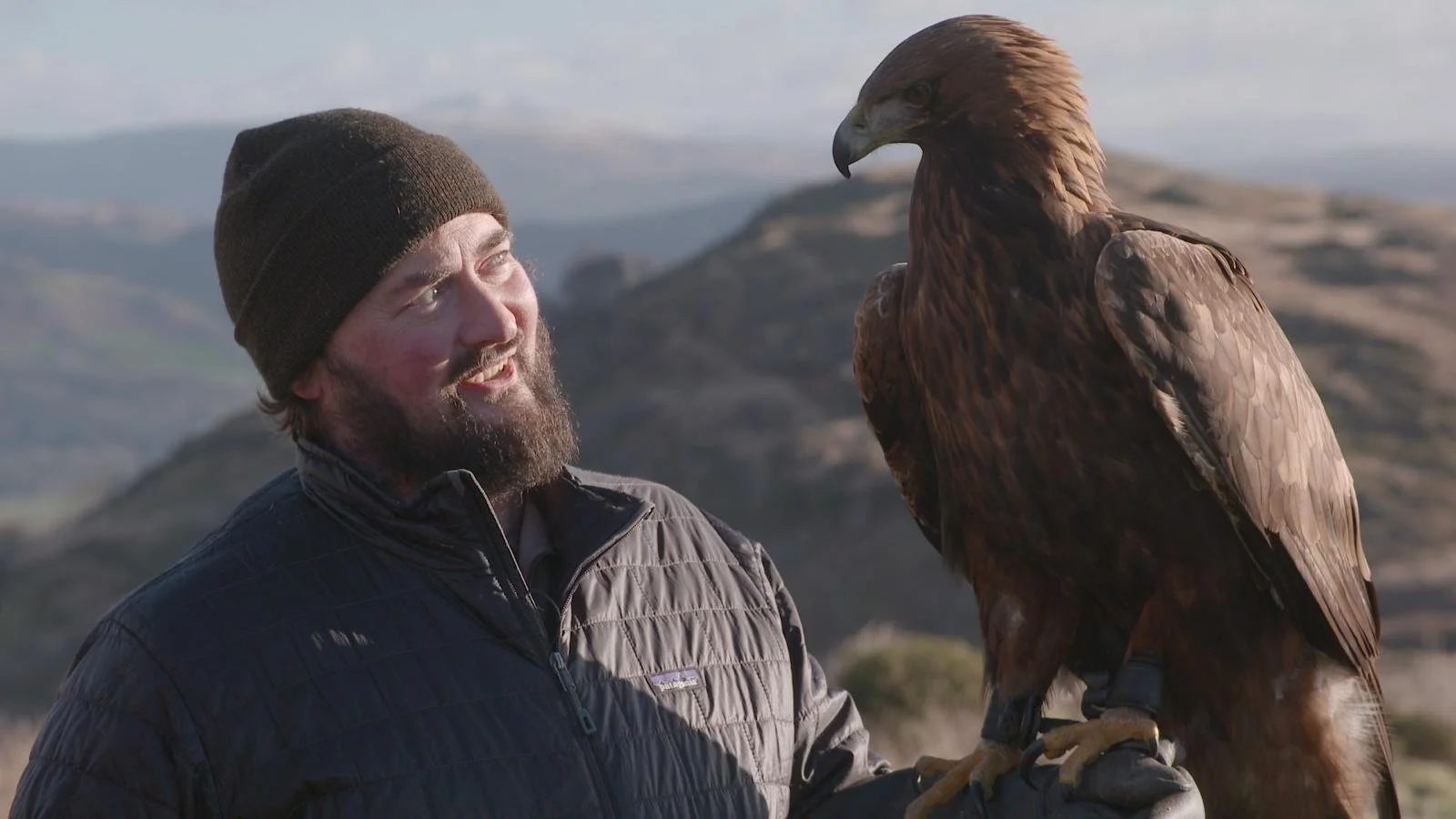
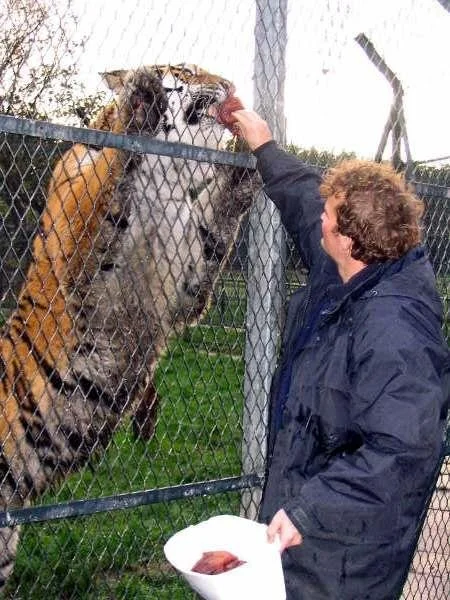
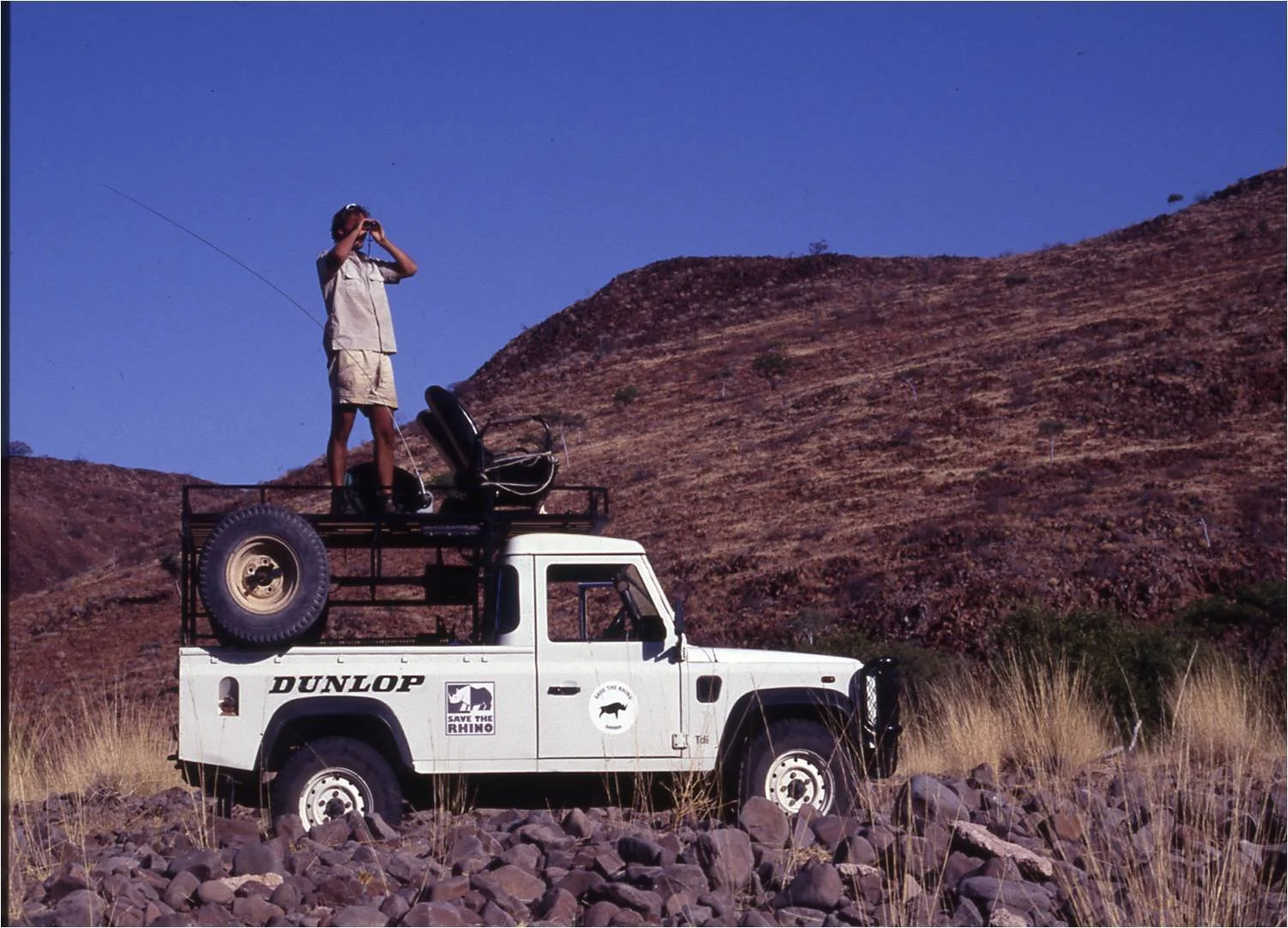
Selected Conservation Programs
Black rhinoceroses | Elephants | Brown bears | Scottish wildcats | Bighorn sheep
Cetaceans (bottlenose dolphins, Risso’s dolphins, pilot whales)
Scottish Wildcat Conservation
He held a protected species licence in the UK authorising genetic sampling and GPS collaring of Scottish wildcats — one of Europe’s most endangered felids. His scientific work supported national conservation planning efforts to prevent extinction.
Sierra Leone & Tropical Fieldwork
Dr O’Donoghue participated in biological survey expeditions documenting wildlife populations including forest elephants and western chimpanzees, contributing to conservation assessments in West Africa.
Species Reintroduction & Rewilding
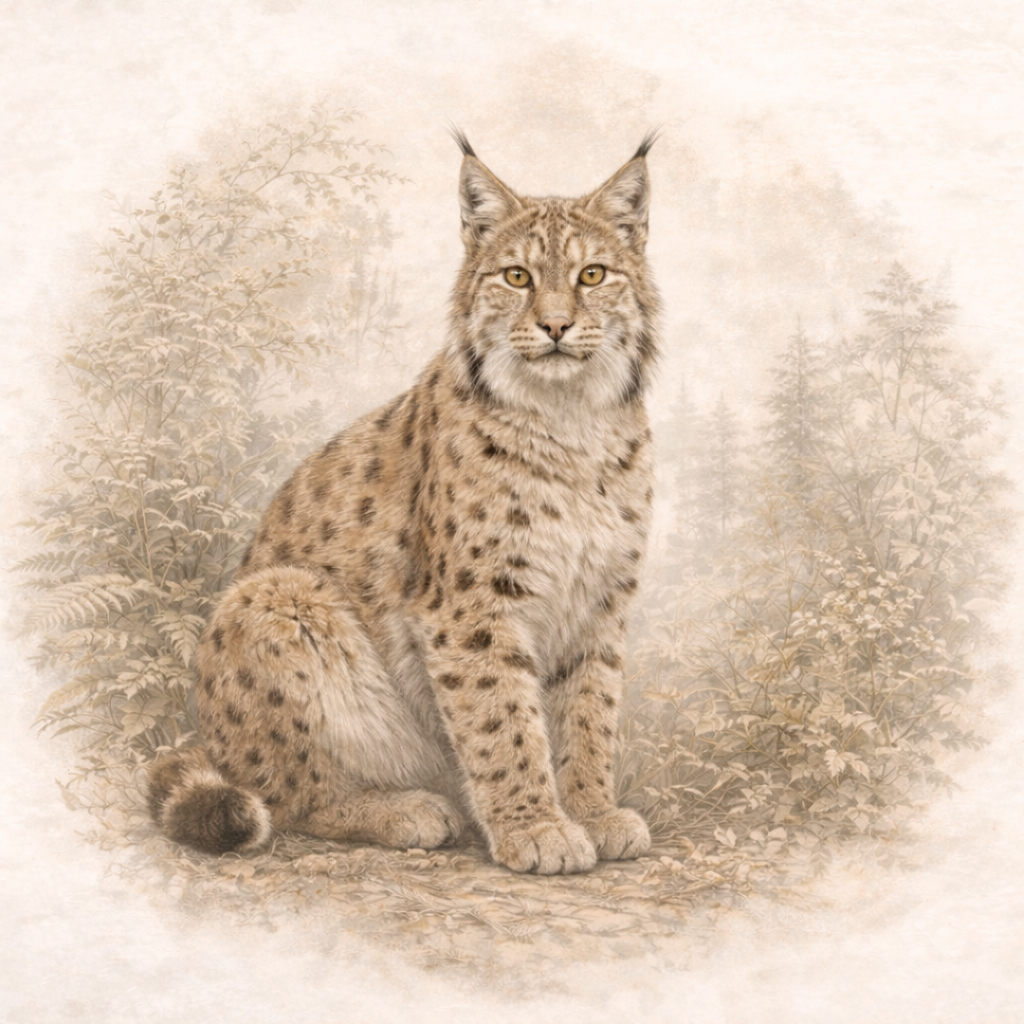
Dr O’Donoghue conducted feasibility research associated with the potential reintroduction of Eurasian lynx to the United Kingdom — the species having been extinct in Britain for approximately 1,300 years.
His work formed part of one of the most significant species reintroduction consultations undertaken in the UK and was covered by major international media outlets including The Washington Post.
He also provided scientific input to the Great Bustard Project, where genetic analyses informed source population selection for reintroduction in Africa.
Mauritius Conservation Programmes
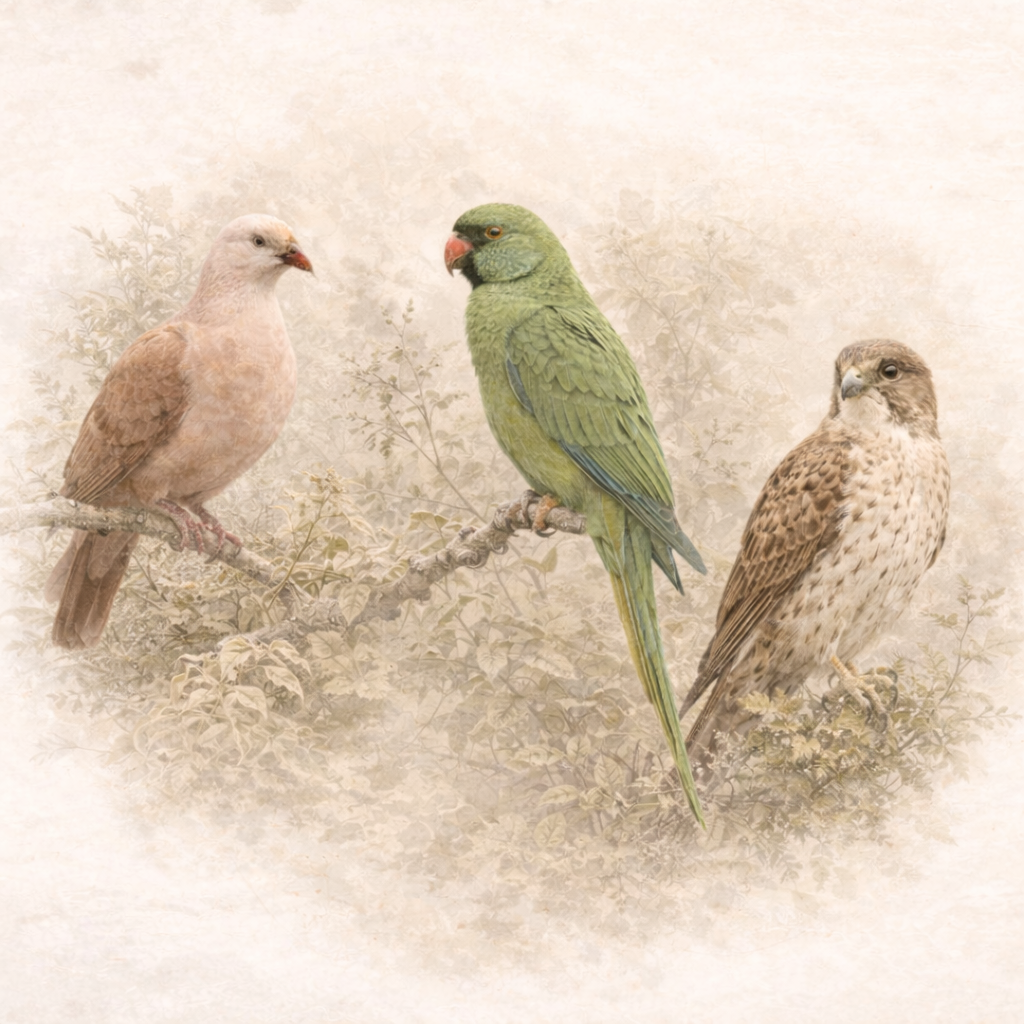
He contributed to conservation initiatives targeting critically endangered bird species in Mauritius, including:
Pink pigeon
Echo parakeet
Mauritius kestrel
These programmes integrated habitat restoration, invasive species management, and population reinforcement strategies.
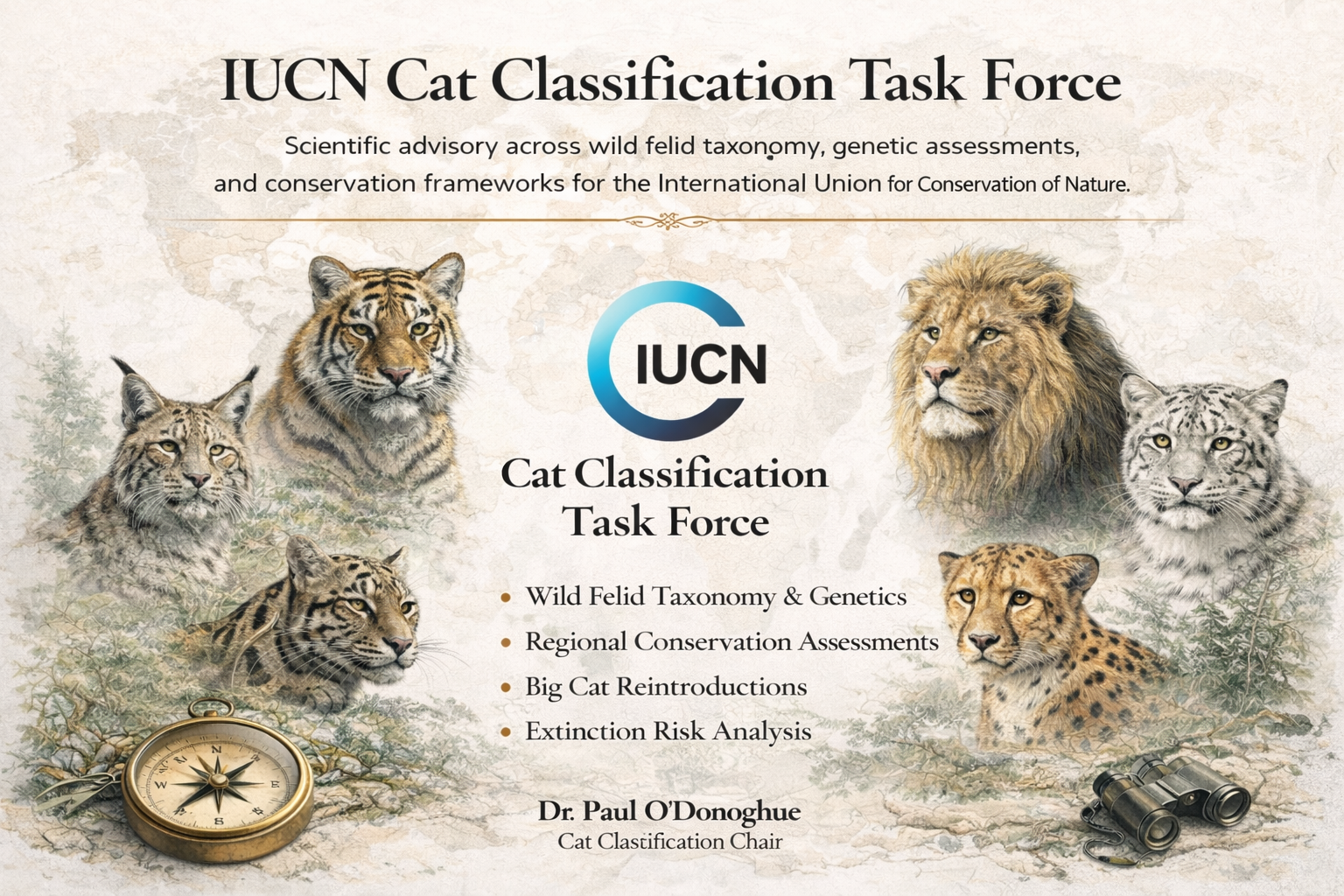
IUCN SSC Cat Specialist Group
Cat Classification Task Force
Dr O’Donoghue serves as a genetic advisor to the IUCN SSC Cat Specialist Group’s Cat Classification Task Force, contributing to the scientific evaluation of wild felid taxonomy and the genetic evidence underpinning species and subspecies classification.
His role supports the integration of molecular genetics into global conservation frameworks, informing Red List assessments, regional conservation planning, and long-term species recovery strategy.
Field & Forensic Systems
Over the course of his career, Dr O’Donoghue has contributed to the development of real-time anti-poaching alert systems integrating GPS-enabled monitoring and satellite communication, and to the validation of DNA-based forensic marker systems used in rhinoceros crime investigation and wildlife trafficking prosecutions.
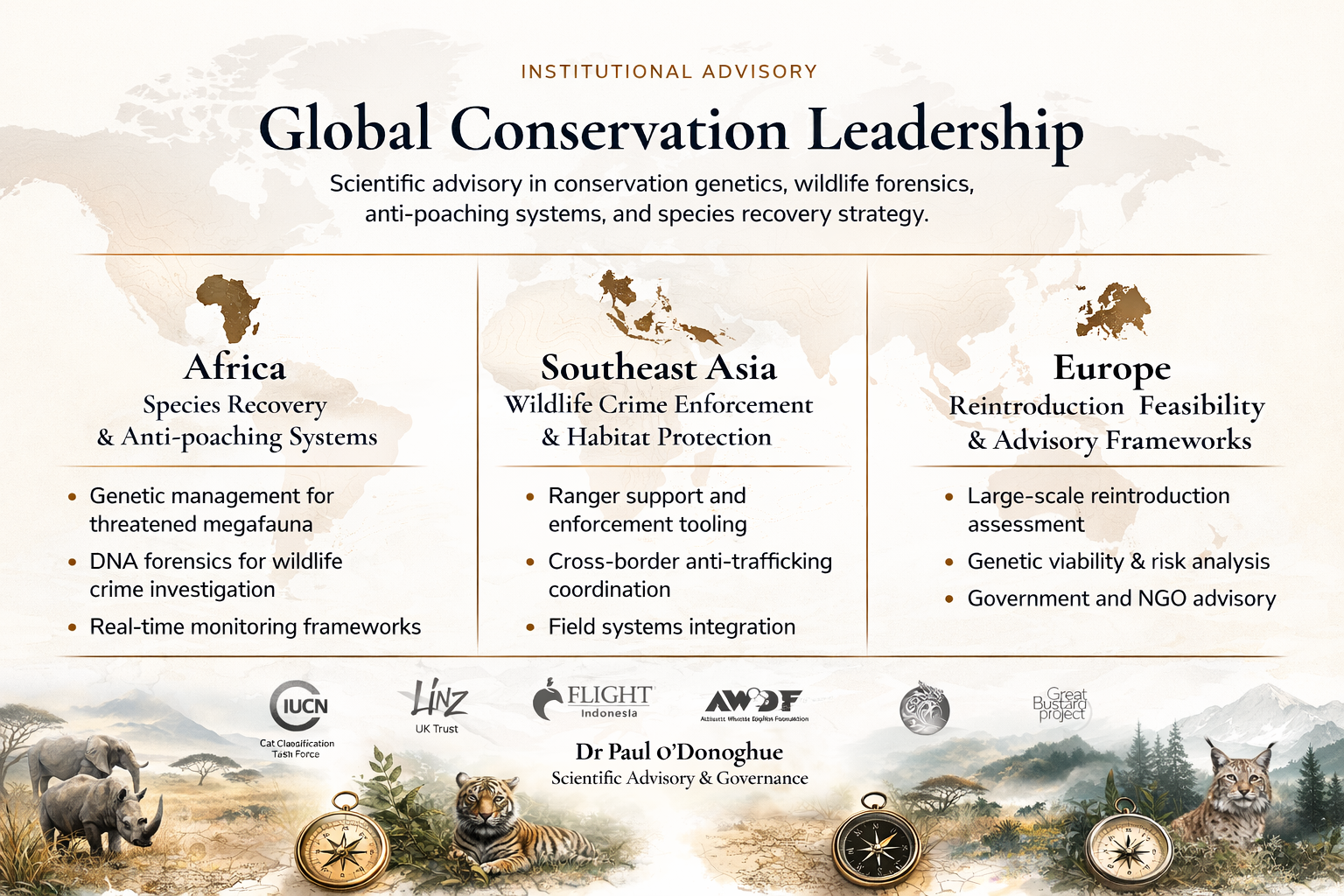
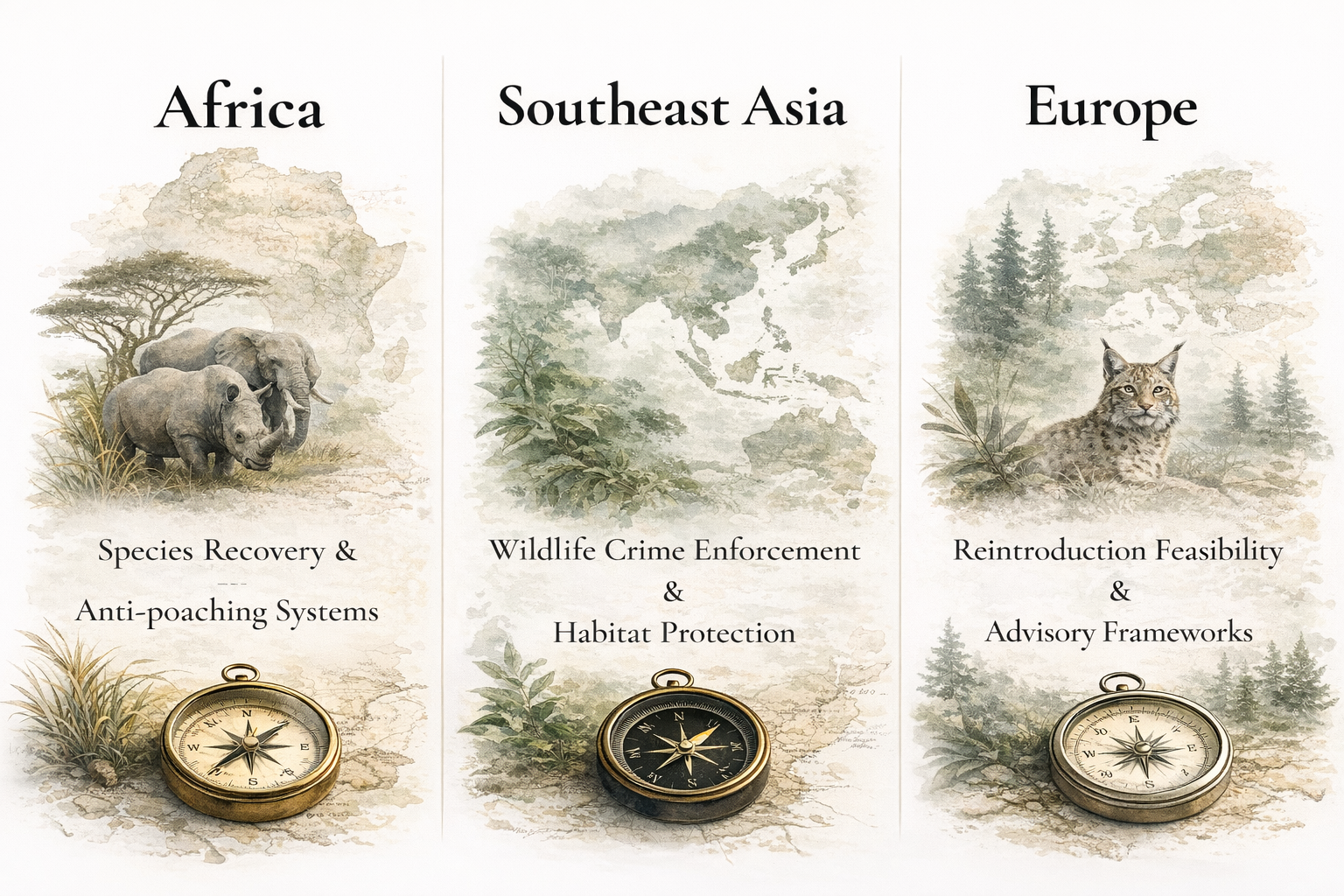
Dr O’Donoghue’s work has operated across three primary conservation landscape
• Africa – Species recovery & anti-poaching systems
• Southeast Asia – Wildlife crime enforcement & habitat protection
• Europe – Reintroduction feasibility & advisory frameworks
Applied Conservation Systems
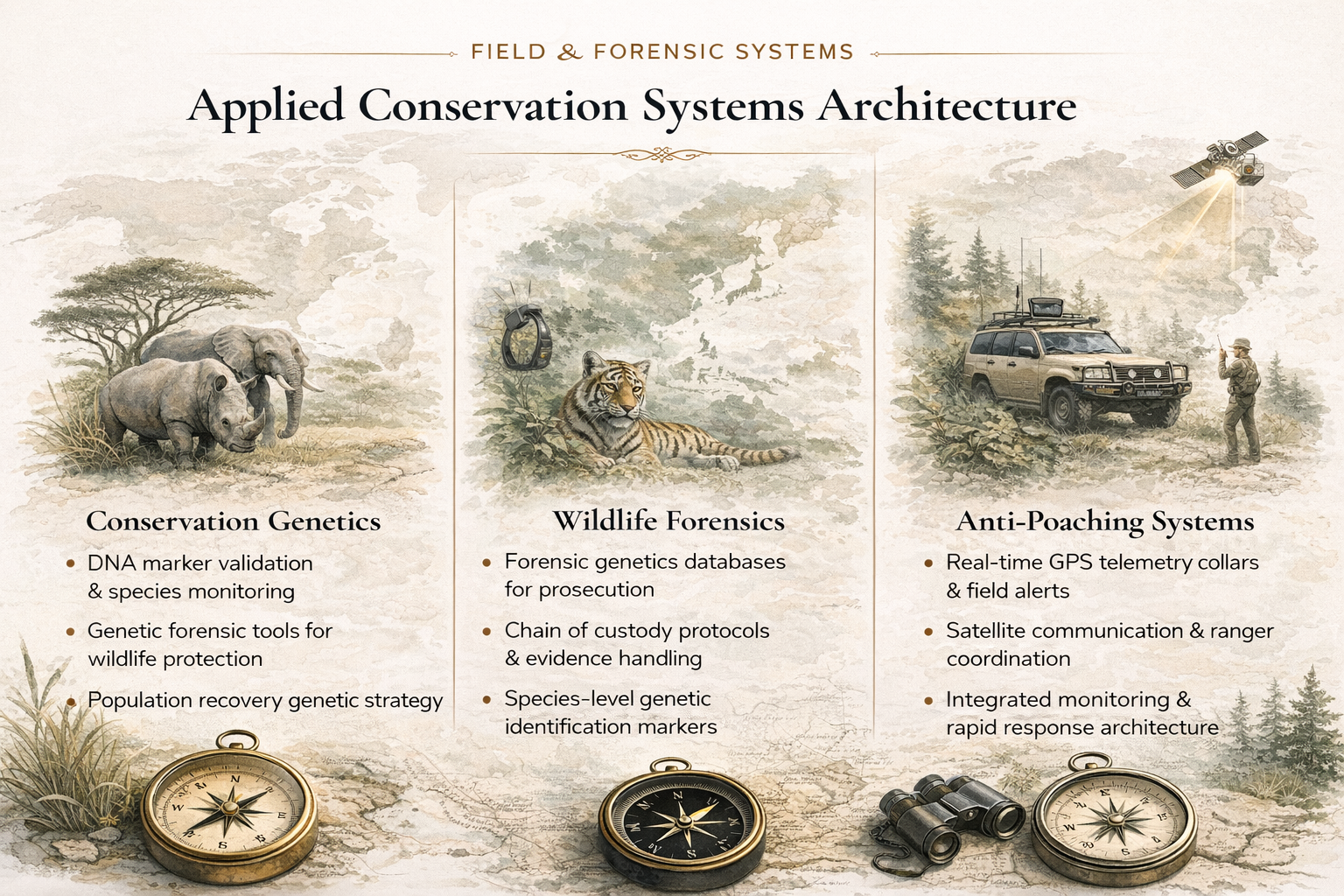
Dr Paul O’Donoghue has designed and deployed integrated conservation systems that combine genetics, forensic science, field monitoring technologies, and institutional governance to protect endangered species at scale.
His work has included:
• Development and validation of DNA marker systems for black rhinoceros crime investigation
• Co-authorship of one of the first peer-reviewed real-time anti-poaching alert system frameworks (Journal of Applied Ecology)
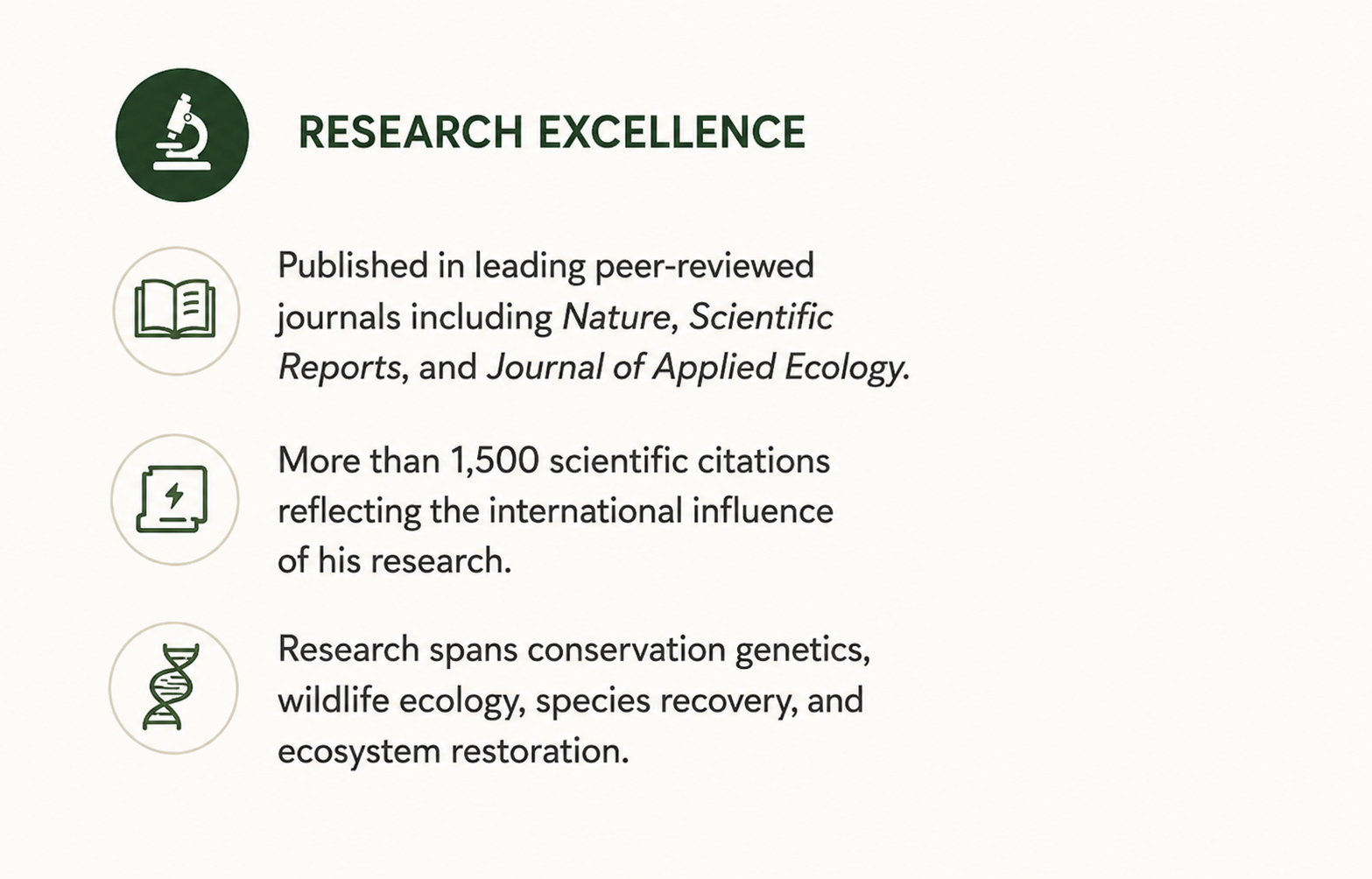
• Genetic erosion research published in Nature (2003) informing international wildlife management policy
• Advisory contribution to the IUCN Cat Classification Task Force
• Establishment of a Conservation Genetics Laboratory supporting applied conservation programmes
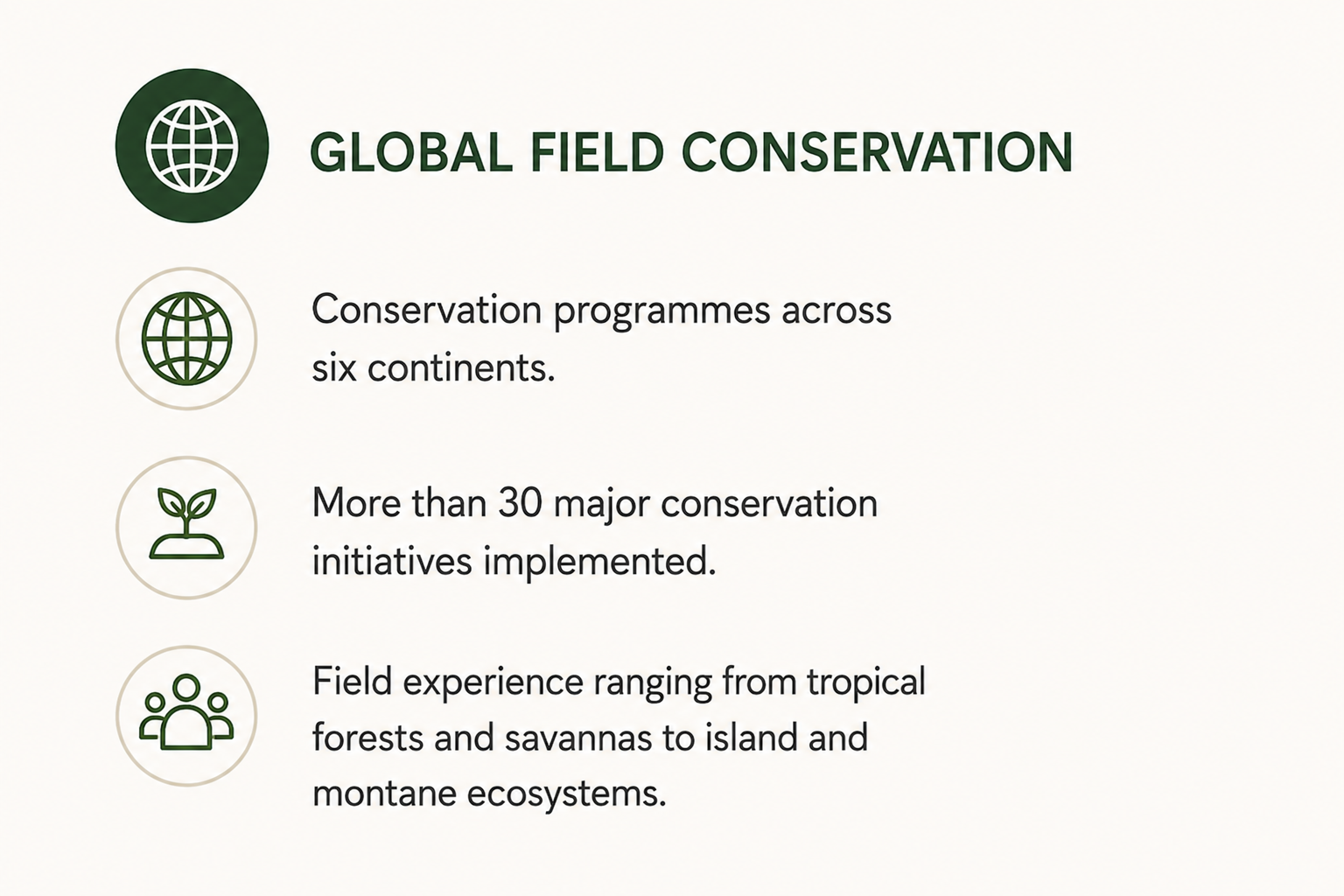
• Field system deployment across Africa, Southeast Asia, and Europe
Scientific Foundation
Nature (2003) — evolutionary consequences of trophy hunting
Scientific Reports — black rhinoceros genetic erosion
Journal of Applied Ecology — real-time anti-poaching systems
Operational Deployment
DNA forensic systems used in rhinoceros crime investigation
GPS-enabled wildlife monitoring and satellite alert frameworks
Field collaboration across Europe, Africa, Southeast Asia
Institutional Governance
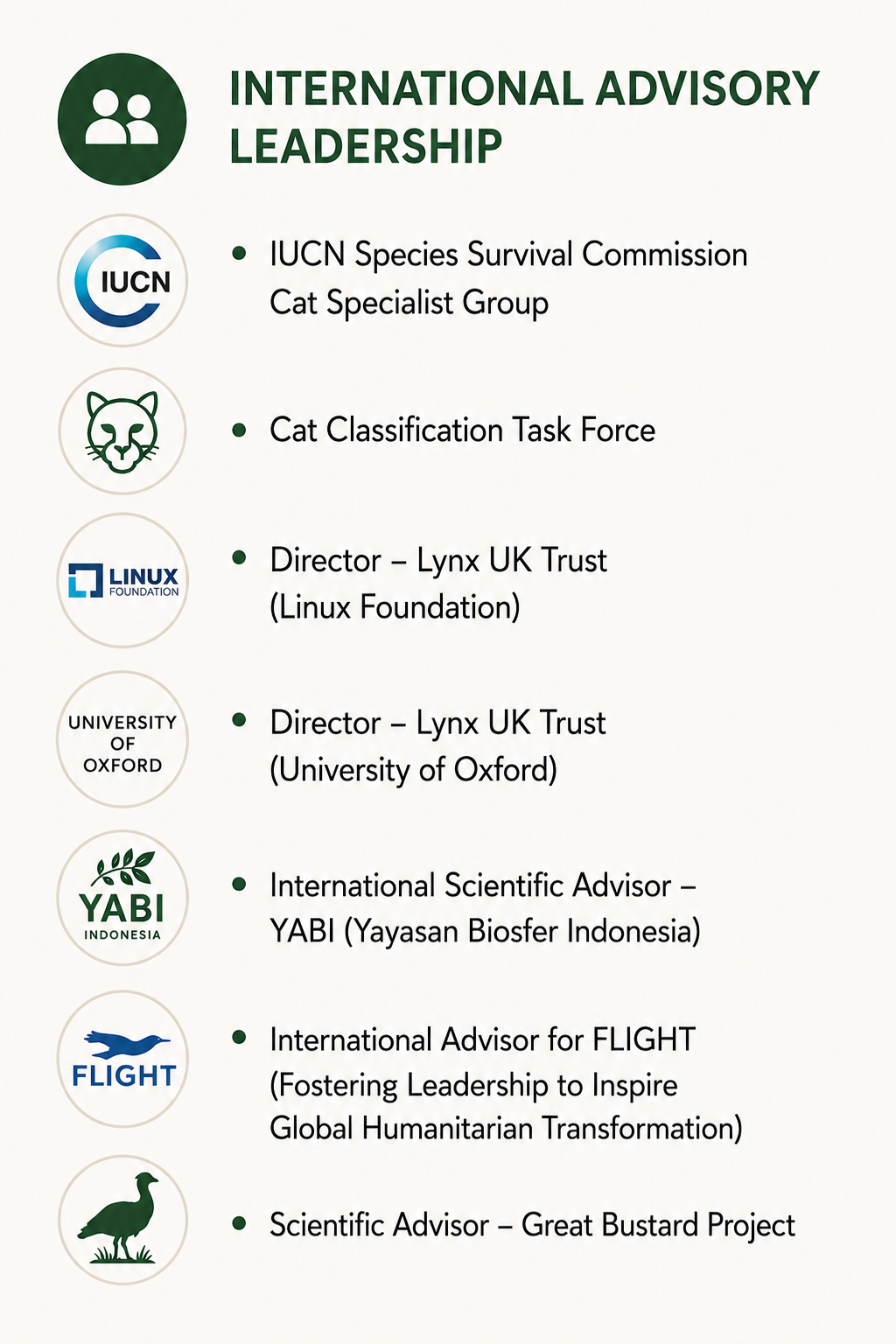
IUCN/SSC Cat Specialist Group – Cat Classification Task Force
Director – Linz UK Trust
International Advisor – FLIGHT Indonesia
Scientific Advisor – Great Bustard Project
Intergrated Field Technologies
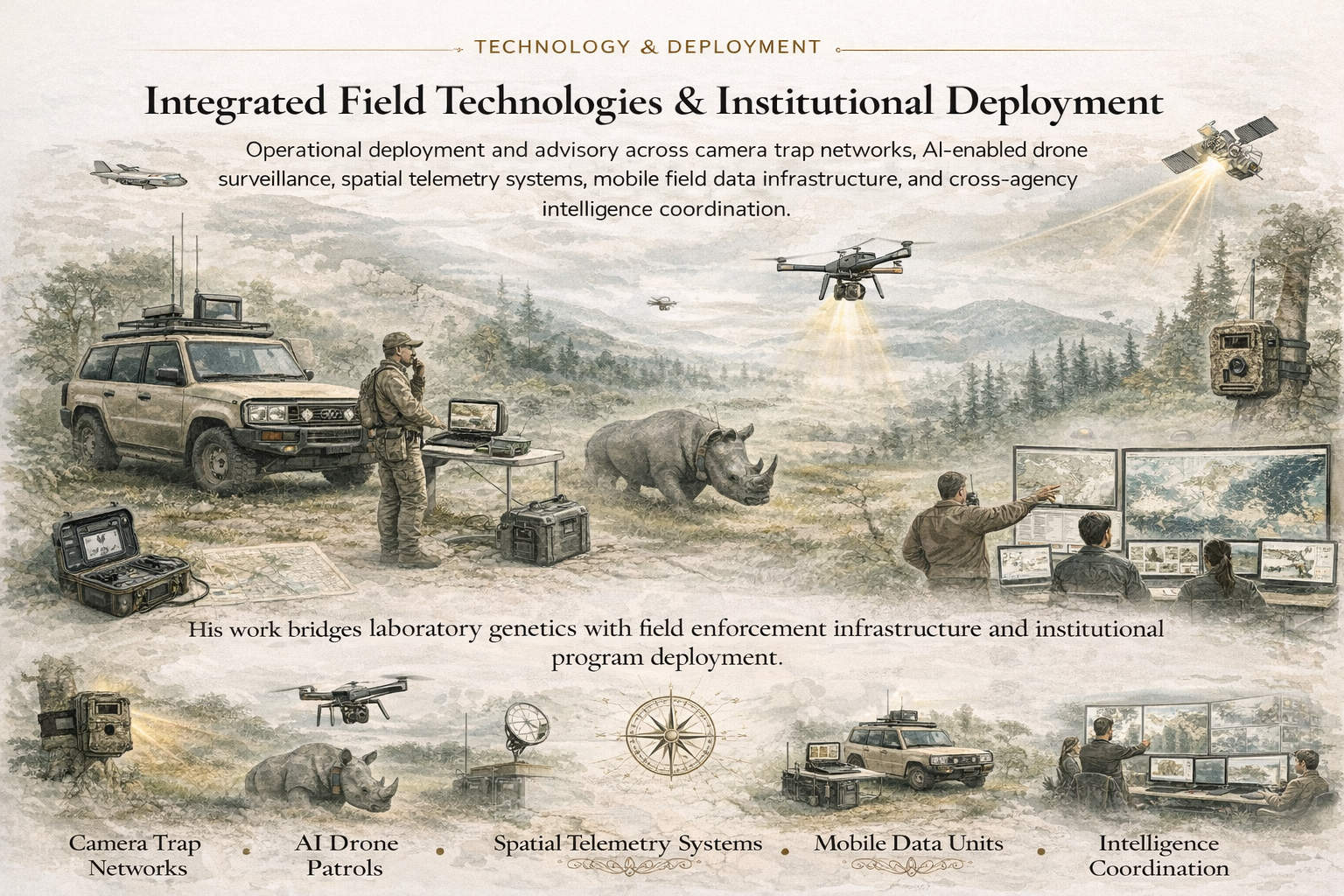
Dr Paul O’Donoghue integrates camera trap networks, GPS-enabled telemetry, satellite communication systems, and mobile field data architecture into operational conservation frameworks that support enforcement, species monitoring, and cross-agency coordination.
This work has included
• GPS-enabled wildlife telemetry
• Camera trap and spatial monitoring networks
• Satellite-linked rapid-response systems
• Mobile ranger data infrastructure
• Cross-agency enforcement coordination
Work Included :
Field Monitoring & Telemetry Systems
GPS collaring and genetic sampling of protected species (e.g., Scottish wildcat licence)
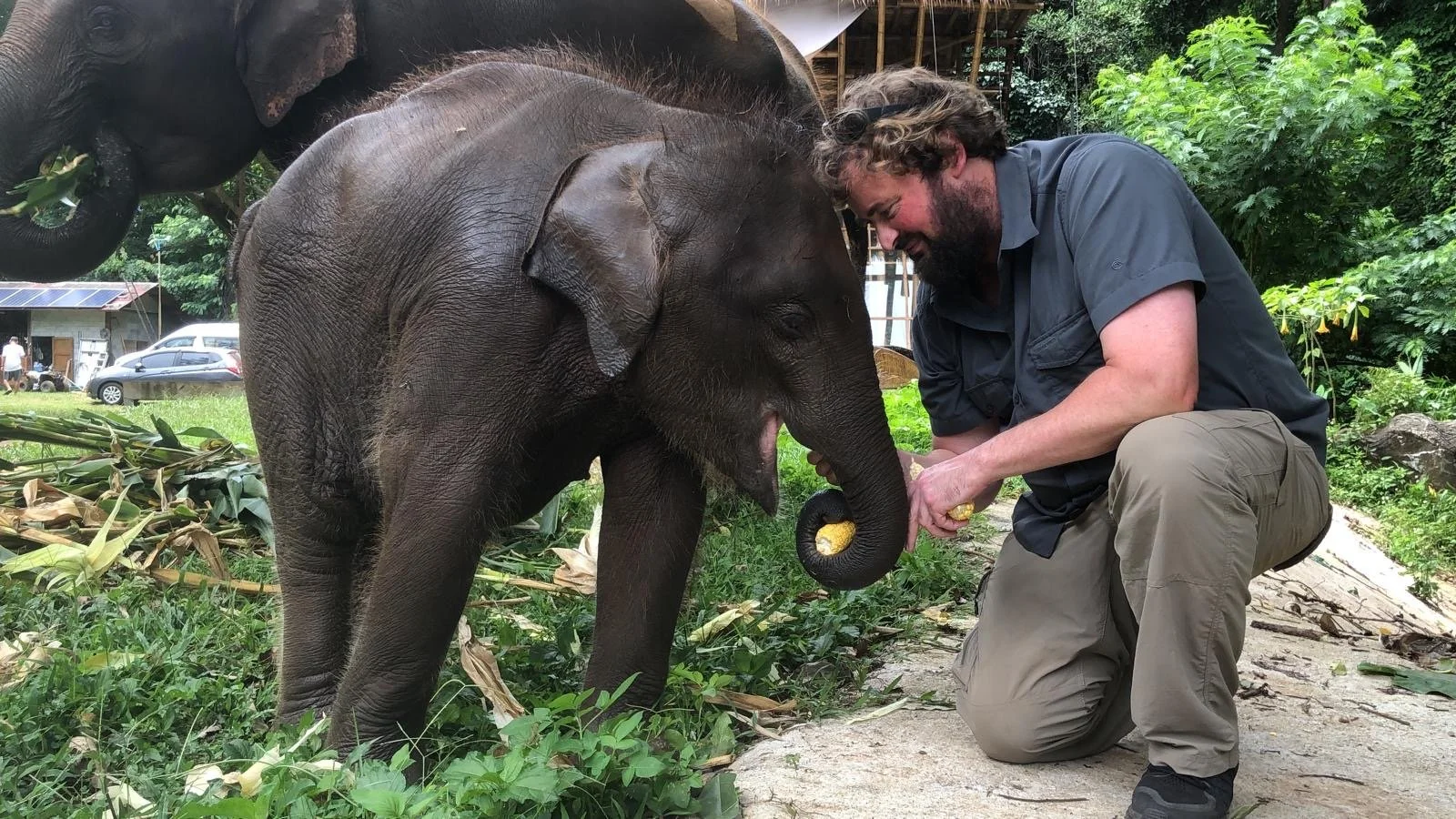
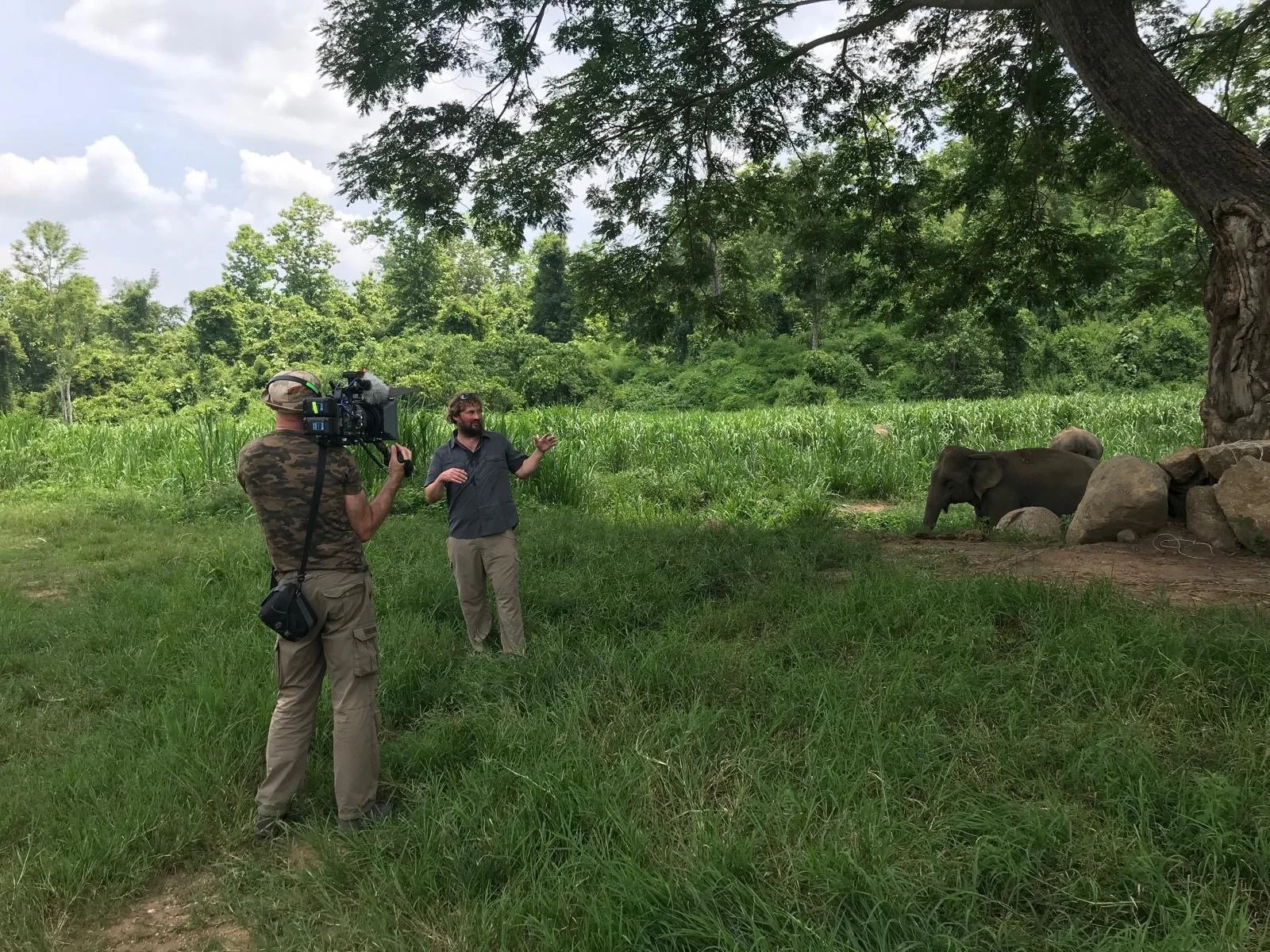
Wildlife capture and monitoring operations (rhinoceros, elephants, brown bears, bighorn sheep)
Cetacean monitoring in migratory corridors (Tenerife field research)
Spatial telemetry integration for species tracking and enforcement response
Monitoring Infrastructure & Intelligence Coordination
Camera trap deployment architecture
Satellite-enabled alert systems
Mobile field data systems for ranger reporting
Rapid-response frameworks linking monitoring to enforcement action
Institutional Deployment
Integration of forensic genetics into wildlife crime prosecution
Cross-border collaboration with protected area authorities
Advisory coordination across NGOs, governments, and conservation bodies
Deployment across Africa, Europe, and Southeast Asia