
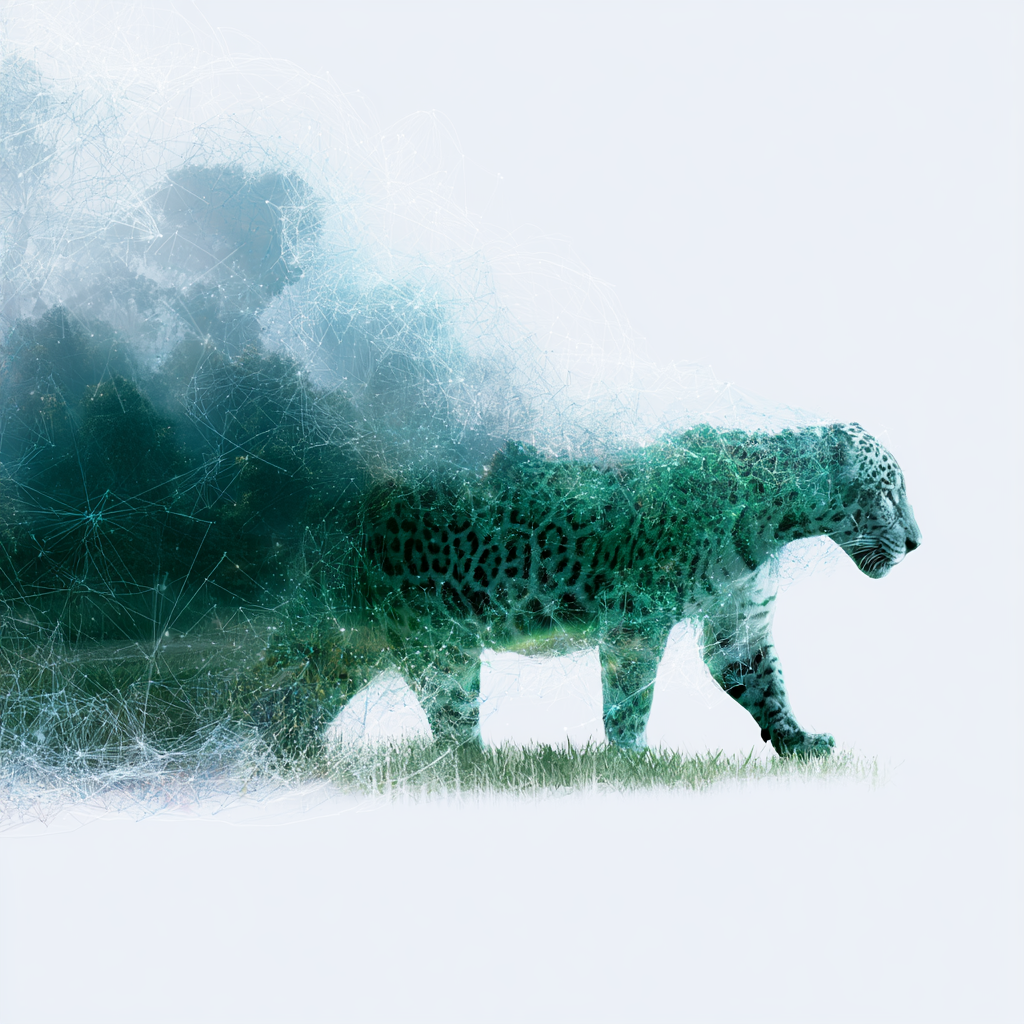
Proposed Paraguay Jaguar Corridor
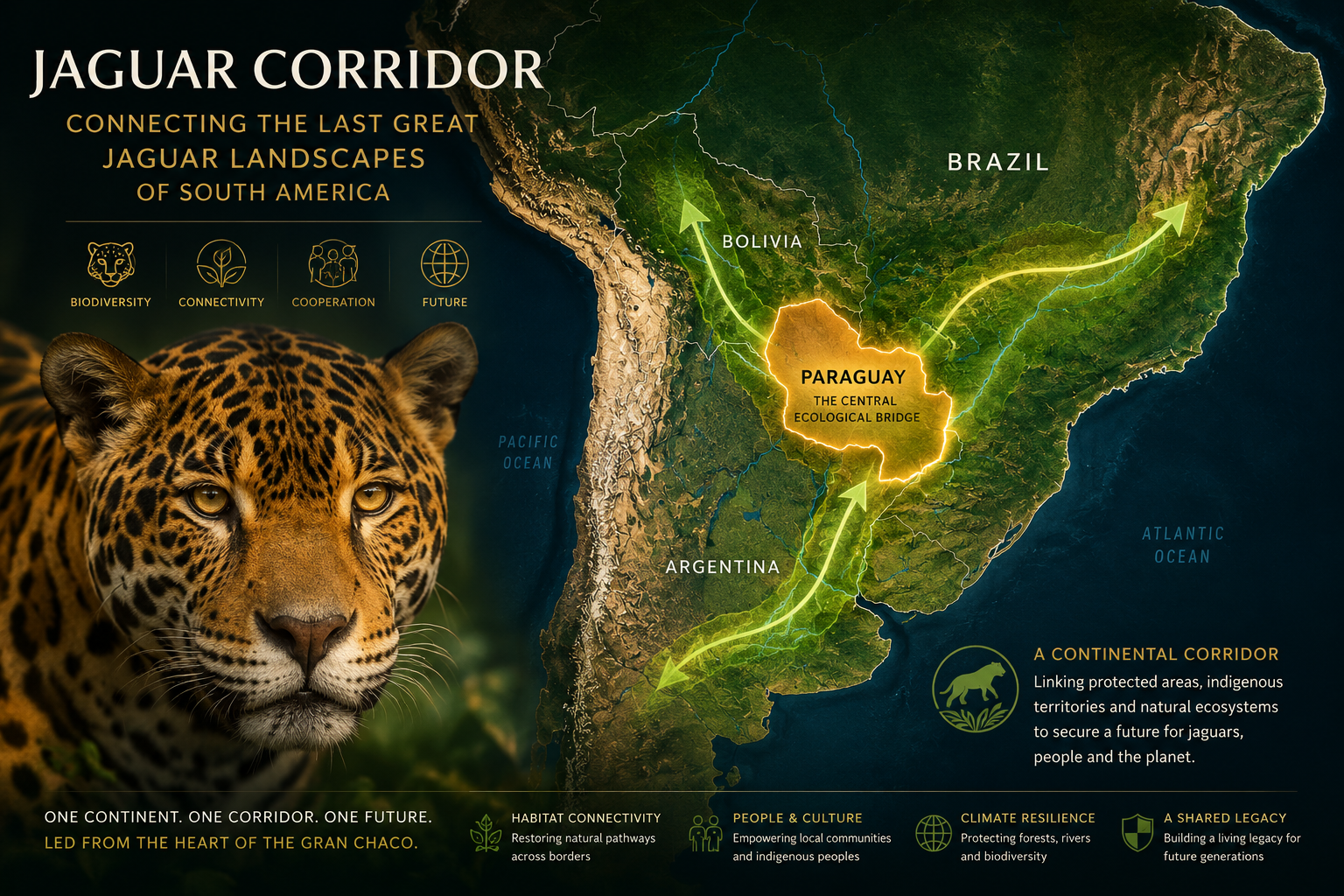
The proposed Jaguar Corridor would protect and reconnect vital jaguar habitat across Paraguay’s Gran Chaco—one of South America’s most important and threatened wilderness landscapes.
Working with government, landholders, Indigenous peoples, scientists and local communities, the initiative would identify priority areas for connectivity, monitor jaguar populations and reduce human–wildlife conflict through voluntary, practical solutions.
A science-led initiative to protect and reconnect vital jaguar habitat across Paraguay’s Gran Chaco.
Working with government, landholders, Indigenous peoples, scientists and local communities, it would monitor jaguars, restore connectivity and reduce human–wildlife conflict through voluntary solutions.
The first step is a national scientific baseline to identify where jaguars remain, how they move and where conservation can have the greatest impact.
Protecting the jaguar means protecting the wider ecosystem it needs to survive.
Proposed Paraguay Jaguar Corridor
Protecting the jaguar means protecting the wider ecosystem it needs to survive.
The proposed Jaguar Corridor would protect and reconnect vital habitat across Paraguay’s Gran Chaco, one of South America’s most important and threatened wilderness landscapes. Working with government, landholders, Indigenous peoples, scientists and local communities, FFB would identify priority areas, monitor jaguar populations and reduce human–wildlife conflict. A national scientific baseline would guide conservation action while creating the biodiversity infrastructure needed for sustainable ecotourism and future nature investment.
A science-led initiative to protect and reconnect vital jaguar habitat across Paraguay’s Gran Chaco.
Working with government, landholders, Indigenous peoples, scientists and local communities, it would monitor jaguars, restore connectivity and reduce human–wildlife conflict through voluntary solutions.
The first step is a national scientific baseline to identify where jaguars remain, how they move and where conservation can have the greatest impact.
Protecting the jaguar means protecting the wider ecosystem it needs to survive.
Protect → Measure → Connect → Build ecotourism value → Attract investment.
FROM CONSERVATION TO MEASURABLE BIODIVERSITY
The Jaguar Corridor is being developed as both a conservation programme and a measurable natural system — tracking changes in jaguar presence, habitat integrity, connectivity and wider ecosystem condition over time.
Protect → Measure → Verify → Value
Using field ecology, camera traps, remote sensing, government data, GBIS and FSIS, FFB is building the evidence needed to demonstrate ecological change, support local communities, reduce human-wildlife conflict and create future opportunities through ecotourism and nature-based economic development.
DECISION-GRADE BIODIVERSITY OUTPUT
Baseline → Change → Recovery → Confidence
THE GOAL : measurable biodiversity performance that can support conservation, communities and long-term nature finance.
FROM BIODIVERSITY EVIDENCE TO A MARKETABLE NATURE EXPERIENCE
The Jaguar Corridor is being developed as both a conservation programme and a measurable natural system — generating the biodiversity evidence needed to protect the landscape, build sustainable ecotourism and attract long-term nature investment.
DECISION-GRADE BIODIVERSITY OUTPUT
Baseline → Monitor → Understand → Restore → Recover species → Verify → Ecotourism → Investment
Using field ecology, camera traps, remote sensing, government data + our technology systems, FFB is building the evidence needed to demonstrate ecological change, support local communities, reduce human-wildlife conflict and create future opportunities through ecotourism and nature-based economic development.
THE GOAL: Create the Biodiversity Infrastructure Needed to
Protect Nature, Build Sustainable Ecotourism and Attract Long-Term Nature Finance.

Why It Matters
For Paraguay, the proposed corridor could strengthen rural livelihoods, support more resilient agriculture, build national scientific capacity and create new opportunities for nature tourism and long-term conservation finance.
For Latin America, it could provide a replicable model for protecting biodiversity across working landscapes demonstrating how conservation, agriculture and economic development can advance together.